
Offices and Commercial Workplaces
Office buildings depend on heating, ventilation and controls to maintain comfortable working conditions. Planned maintenance can help manage comfort complaints, equipment faults and seasonal changes.
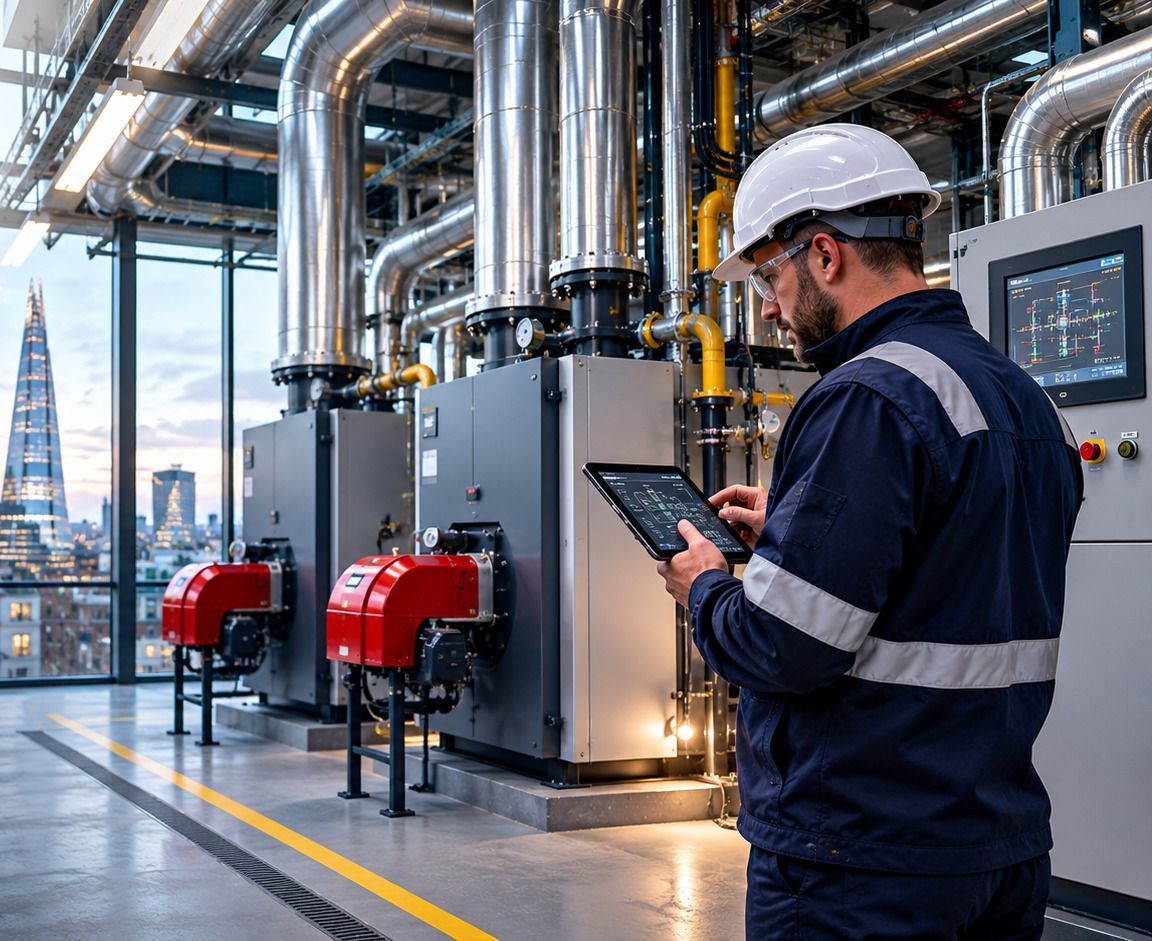
Heating, ventilation, plumbing, building controls, pumps and plant-room equipment all need to work together to keep commercial buildings safe, comfortable and efficient.
For commercial engineering enquiries, Flair Facilities Ltd provides planned and reactive mechanical building-services support across Greater London.
24/7 emergency mechanical support020 7998 9005Commercial building engineering
Commercial building engineering involves the installation, maintenance, repair and management of the mechanical systems used in commercial properties: heating, ventilation, air conditioning, boilers, plumbing, water-pressure equipment, pumps, plant rooms and building management controls.
Understanding how these systems relate helps facilities teams make more informed maintenance decisions and avoid treating every fault as an isolated problem. Our technical resources explain common issues, maintenance requirements and when a qualified commercial engineer may be needed.
Explore the knowledge hub →A problem in one area can affect several others
can reduce heating performance even when the boiler is operating.
can cause a BMS to request unnecessary heating or cooling.
can disrupt equipment serving several floors.
What we cover
From planned maintenance to unexpected equipment failures, for offices, hotels, retail, industrial and other commercial properties across Greater London.
Maintenance, repairs, circulation and temperature-control problems, upgrades and planned programmes.
Learn more Qualified engineers onlyInspection, servicing, repairs and component replacement for lockouts, pressure faults and shutdowns.
Learn moreAir handling units, fan coils, heating and cooling, ventilation and HVAC fault diagnosis.
Learn moreSensors, schedules, alarms and control sequences checked against how the building really runs.
Learn morePipework repairs, hot-water plant, water-pressure investigations and mechanical plumbing.
Learn more Qualified engineers onlyCommercial gas appliances, associated pipework, boilers, testing and safety requirements.
Learn moreBoilers, pumps, calorifiers, pressurisation units, valves and heat exchangers assessed as one system.
Learn moreBooster pumps, circulation pumps and pressurisation units: cycling, vibration, leaks and pressure loss.
Learn moreHeating and chilled-water pipework, valves and insulation: leaks, heat loss and replacement.
Learn more Qualified engineers onlyInspection and remedial work for corrosion, damaged components and flue connection problems.
Learn moreDescribe the symptoms and the equipment. The right engineer can be matched to the fault.
Request an Engineer 020 7998 9005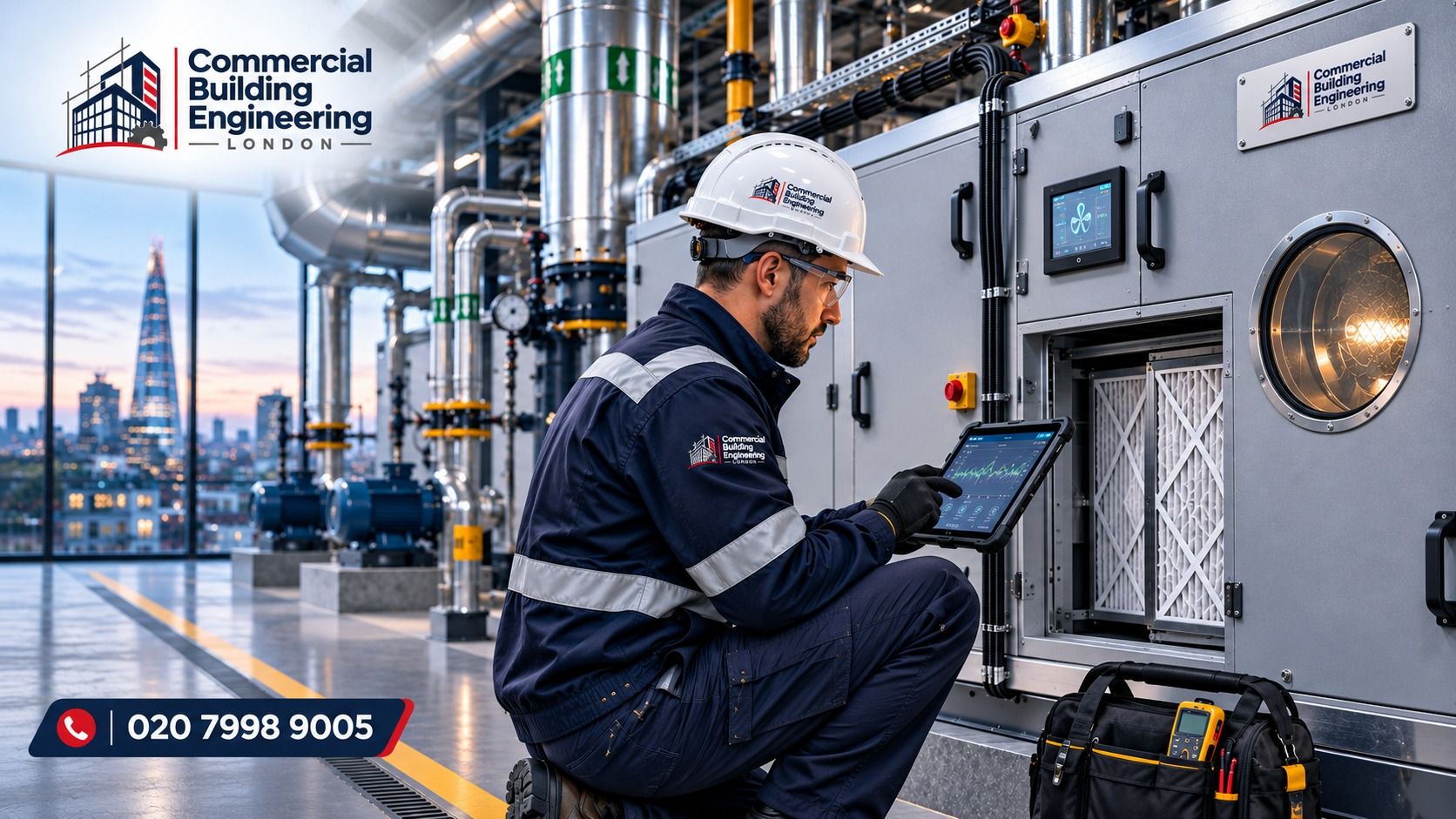
Planned preventative maintenance
Planned preventative maintenance (PPM) means inspecting, servicing and maintaining building equipment to an established schedule. For commercial properties, maintenance planning may cover:
The right schedule depends on the equipment, manufacturer guidance, operating conditions and applicable requirements. A structured programme can help identify developing issues before they become larger disruptions.
24/7 emergency support
Heating breakdowns, boiler failures, pump faults, water-pressure problems and other plant-room issues can affect staff, customers, tenants or critical building processes.
The right response depends on the nature of the fault and the risks involved. Where a system has become unsafe, follow your established safety and emergency procedures rather than attempting unqualified repairs.
Flair Facilities Ltd provides 24/7 emergency mechanical callout support across its stated Greater London coverage area.
Smell gas or suspect carbon monoxide?
Leave the area, avoid operating electrical switches or naked flames, and from a safe place call the National Gas Emergency Service on 0800 111 999. If anyone feels unwell, call 999.
Buildings and industries
Mechanical engineering requirements vary by building type, operating hours and how the premises are used.
Office buildings depend on heating, ventilation and controls to maintain comfortable working conditions. Planned maintenance can help manage comfort complaints, equipment faults and seasonal changes.
Hotels often require reliable heating and hot-water systems throughout the day. Boilers, calorifiers, pumps and water-pressure equipment can all affect guest facilities.
Retail buildings may need heating, cooling and ventilation systems that respond to changing occupancy, opening hours and seasonal demand.
Educational facilities require maintenance planning that considers term dates, occupied spaces, heating requirements and disruption to normal operations.
Healthcare properties can have particular environmental and operational requirements. Engineering work must be planned according to the site's specific systems, safety procedures and applicable standards.
Industrial and warehouse properties may use warm-air heating, ventilation, mechanical plant or other specialised equipment suited to their activities.
Apartment blocks and mixed-use developments may rely on communal heating, hot-water systems, booster pumps and shared plant rooms that serve multiple occupants.
How maintenance priorities change across offices, hotels, schools, healthcare and more.
Explore Engineering Services by Building TypeSystems thinking
A mechanical fault is not always caused by the equipment where the symptoms first appear.
By considering the relationships between systems, facilities teams can give engineers better information, prioritise investigations and plan maintenance more effectively.
These examples are possible causes, not a diagnosis. Professional assessment is required to establish the actual fault.
| Reported issue | Possible systems involved |
|---|---|
| Uneven heating across floors | Boilers, circulation pumps, valves, BMS controls |
| Low water pressure | Booster pumps, valves, pipework, water supply |
| Frequent boiler lockouts | Boiler components, controls, circulation, system pressure |
| Poor ventilation | AHUs, fans, filters, BMS schedules |
| Excessive energy use | HVAC equipment, heating controls, operating schedules |
| Repeated plant-room alarms | Pumps, sensors, controllers, equipment faults |
For facilities managers and consultants
Facilities managers need dependable information when managing equipment failures, maintenance budgets and contractors. M&E consultants need clear engineering information when developing remedial recommendations, assessing plant performance or planning building-system improvements.
This information helps determine which engineering disciplines may be required and supports a more informed initial assessment.
Send Your Building DetailsUseful information for technical discussions
Coverage
Commercial buildings across Greater London have different engineering requirements based on their age, use, occupancy and installed equipment. Office properties in the City of London, mixed-use buildings in Southwark, commercial premises in Westminster and larger facilities in outer London boroughs may all need different approaches to mechanical maintenance.
Flair Facilities Ltd provides associated commercial mechanical engineering services across Greater London. Service availability for individual sites should be confirmed when making an enquiry.
Integrated approach
Commercial heating, HVAC, plumbing and building controls should not always be managed as unrelated assets. Replacing a heating component without investigating circulation or control problems may leave the original fault unresolved. Similarly, changing BMS settings without checking the connected equipment may not correct the underlying issue.
Actual outcomes depend on building condition, equipment and the work completed.
An integrated approach can support
Knowledge hub
Technical guides to help building operators understand common faults, maintenance requirements and engineering decisions.
Heating failures, boiler lockouts, maintenance planning, pressure problems and commercial heating-system upgrades.
Read guidesCommon HVAC faults, air handling equipment, maintenance requirements and the relationship between ventilation and building controls.
Read guidesSensors, temperature control, BMS alarms, operating schedules and how building controls affect mechanical systems.
Read guidesPump failures, pressurisation units, water circulation, plant-room inspections and mechanical equipment maintenance.
Read guidesCommercial water pressure, hot-water plant, pipework leaks and the role of pumps and valves.
Read guidesMaintenance planning, emergency preparedness, asset records, contractor coordination and building-system troubleshooting.
Read guidesCommercial building engineering involves the mechanical and associated systems that support commercial properties. This can include heating, HVAC, boilers, plumbing, water systems, building controls, pumps and plant-room equipment.
HVAC focuses primarily on heating, ventilation and air conditioning. Mechanical building engineering is broader and can also include boilers, water-pressure systems, pumps, pipework, plant rooms and associated infrastructure.
A BMS monitors and controls selected building equipment through sensors, controllers and automated schedules. It can help manage heating, ventilation, alarms and building operation. See BMS & building controls.
Commercial boiler servicing intervals depend on the appliance, manufacturer's instructions, operating conditions and relevant requirements. A competent commercial gas engineer should determine the appropriate servicing arrangements.
Low water pressure can result from supply issues, booster-pump faults, leaking pipework, valve problems or other system conditions. An engineer may need to assess the complete water-pressure arrangement to identify the cause. See pumps & water pressure.
A planned maintenance programme may include equipment inspections, servicing, operational checks, condition reporting and recommended remedial work. The specific tasks depend on the building and its installed assets. See planned preventative maintenance.
Yes. Incorrect temperature readings, control settings, operating schedules or communication problems can influence heating-system operation, although the underlying mechanical equipment should also be assessed.
Urgent engineering assistance may be needed when equipment failures create safety risks, prevent essential building functions or cause significant operational disruption. Appropriate emergency procedures should always take priority. See 24/7 emergency support.
Whether you are reviewing a recurring heating fault, planning plant-room maintenance, assessing commercial water-pressure problems or arranging help with a mechanical breakdown, getting the right engineering support starts with understanding the equipment and the issue.
Commercial Building Engineering London provides technical guidance and connects commercial engineering enquiries with Flair Facilities Ltd.
020 7998 9005