

In short
Commercial flue systems carry combustion products from boilers and other gas appliances safely out of the building. Potential issues include corrosion, damaged components, unsuitable ventilation and deterioration of flue connections. Because a flue fault can allow fumes into occupied areas, flue problems must be investigated by appropriately qualified professionals.
Flue faults should be investigated by appropriately qualified professionals. If a carbon monoxide alarm sounds or you suspect fumes, get people out, call the National Gas Emergency Service on 0800 111 999 and call 999 if anyone feels unwell.
What the work may involve
- Flue inspection and condition reporting
- Remedial work to damaged or corroded sections
- Flue connection and joint repairs
- Checks linked to appliance servicing
- Ventilation and flue arrangement review
Warning signs to report
- Carbon monoxide alarms sounding
- Visible corrosion, gaps or damage to flue sections
- Condensate leaking from flue joints
- Staining or soot near the flue or appliance
- Boilers locking out with flue-related faults
Why flues matter
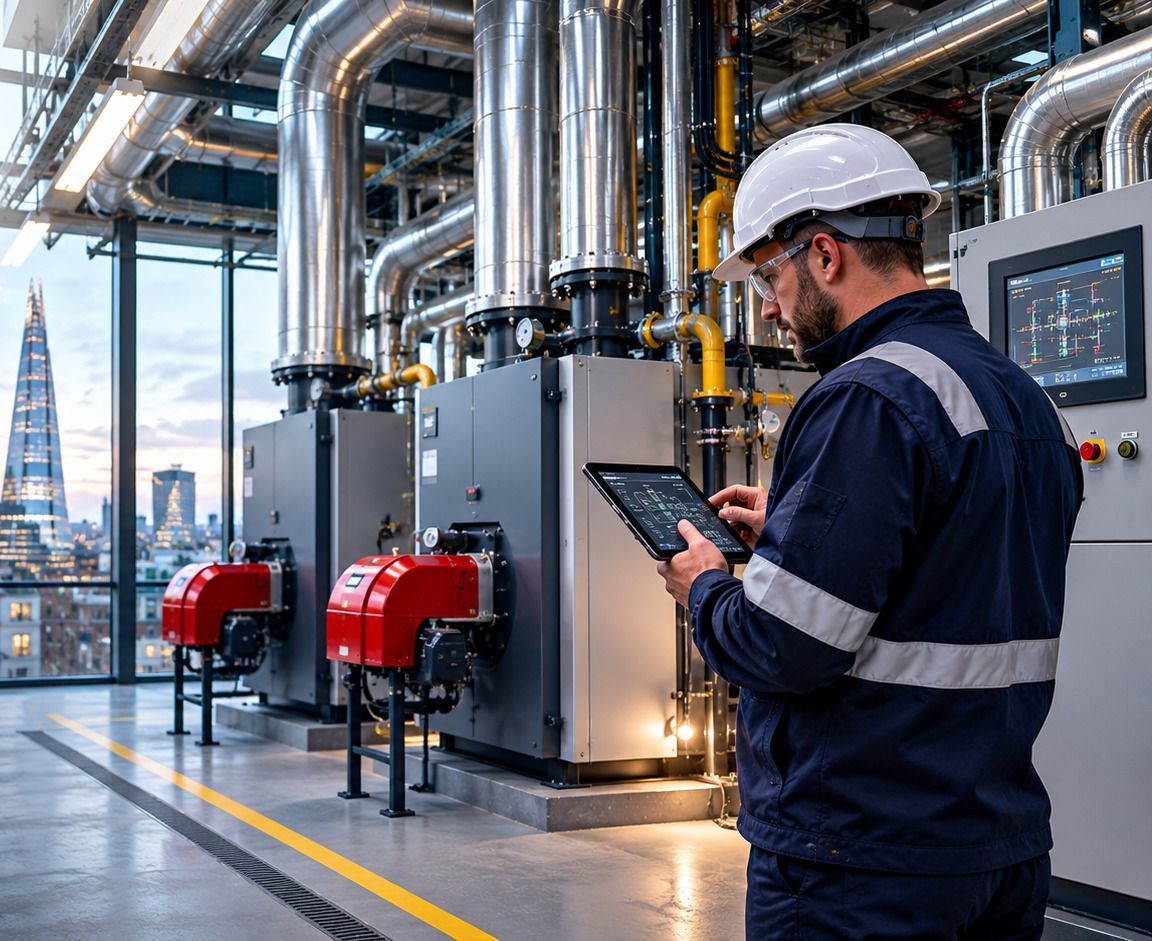
Every gas-fired boiler or appliance produces combustion products, including carbon monoxide. The flue system’s job is to discharge them safely outside. If a flue is damaged, blocked, poorly connected or affected by ventilation changes, those products can escape into plant rooms or occupied areas.
Common flue issues
- Corrosion of flue sections, particularly where condensate is present
- Damaged components or supports, sometimes after roof or building works
- Deteriorating connections and seals between sections and at the appliance
- Unsuitable ventilation in the plant room affecting combustion and flue performance
Never cover, block or alter a flue or flue terminal, and never ignore a carbon monoxide alarm.
Inspection and remedial work
Flue inspections look at the condition of sections, joints, supports and terminals, and how the flue performs with the appliance running. Remedial work may involve replacing damaged sections, repairing connections or addressing ventilation. The right approach depends on the appliance, building arrangement and relevant requirements.
Related services
Flue problems are usually found alongside boiler and gas work. If a flue fault has stopped your heating, see 24/7 emergency support.
Discuss your flue systems requirements
Send the equipment details, symptoms and site address through Flair Facilities Ltd, or call to talk it through.
Flue Systems FAQs
What are the warning signs of a commercial flue problem?
Carbon monoxide alarms, visible corrosion or gaps in flue sections, condensate leaking from joints, staining or soot, and boilers locking out with flue or air-pressure faults. Stop using the affected appliance and get qualified help.
Who can work on commercial flues?
Flues serving gas appliances form part of the gas installation's safe operation, so work should be carried out by appropriately qualified and Gas Safe registered professionals competent for commercial work.
Can building changes affect a flue?
Yes. New openings, ventilation changes, roof works or nearby structures can affect how combustion products are discharged. Tell your engineer about any building works near flue terminals or plant rooms.
Should flues be checked when boilers are serviced?
Flue condition and appliance operation are closely linked, so flue checks are normally considered alongside appliance servicing. The scope depends on the appliance and the installation.
Useful UK references
- Gas safety Health and Safety Executive
- Carbon monoxide poisoning NHS
- Check an engineer or business Gas Safe Register
Last reviewed 20 November 2026. General guidance only; it does not replace a qualified site-specific assessment.