

In short
Commercial gas engineering covers the inspection, maintenance, testing and repair of gas appliances and installation pipework in commercial premises. All work must be carried out by engineers who are competent and Gas Safe registered for the specific commercial work involved. Suspected gas leaks need immediate safety action before anything else.
Suspected gas leaks, unsafe combustion conditions and damaged gas equipment need immediate safety precautions and appropriately qualified assistance. Do not attempt repairs or testing without the required competence. If you smell gas, leave the area and call the National Gas Emergency Service on 0800 111 999.
What the work may involve
- Commercial gas appliance servicing and repair
- Gas installation pipework work
- Gas boiler and burner work
- Testing associated with gas installations
- Safety checks and recommendations
Warning signs to report
- A smell of gas anywhere on site
- Carbon monoxide alarms sounding
- Yellow or unstable flames, soot or staining
- Damaged or corroded gas pipework or fittings
- Appliances that lock out or will not light
Gas safety comes first
If anyone smells gas or a carbon monoxide alarm sounds, the first steps are always safety steps:
- Move people away from the area.
- Do not operate electrical switches or use naked flames.
- If it is safe, open doors and windows and turn off the gas at the emergency control valve.
- From a safe place, call the National Gas Emergency Service on 0800 111 999.
- If anyone has symptoms such as headache, dizziness or nausea, call 999.
Only arrange engineering repairs once the immediate risk has been dealt with.
What commercial gas engineering covers
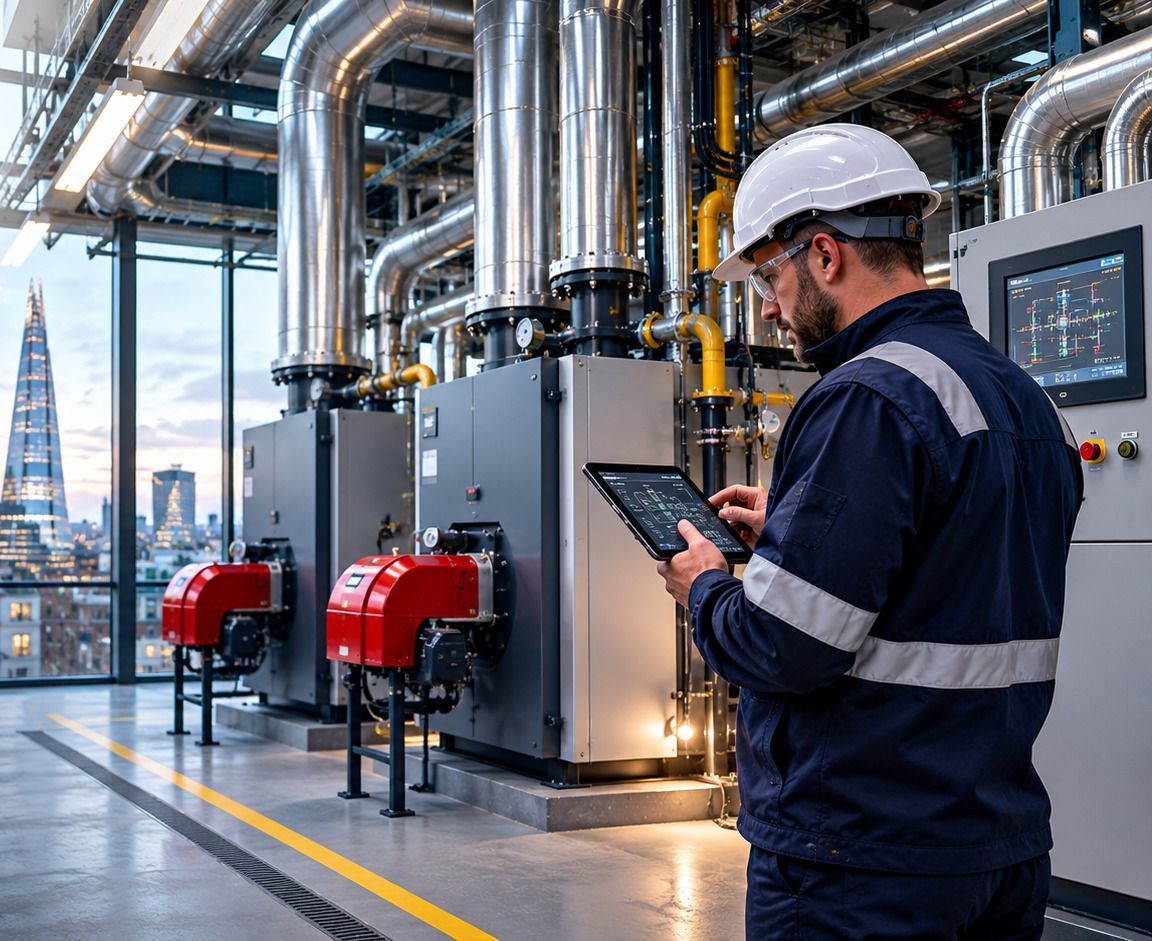
Commercial gas work can include appliances such as boilers, burners, water heaters and catering equipment, together with the installation pipework that supplies them. Engineers may carry out servicing, repairs, replacements and the testing associated with gas installations, and give recommendations on anything that needs attention.
Competence and registration
Gas work must only be carried out by engineers who are Gas Safe registered and competent for the specific type of commercial work involved. Facilities teams can check an engineer’s registration on the Gas Safe Register. Building staff should never attempt repairs, adjustments or testing on gas equipment.
Related systems
Gas appliances depend on safe flue systems and adequate ventilation, and most commercial gas use is through boilers and plant rooms. Problems in these areas should be investigated together.
Discuss your commercial gas requirements
Send the equipment details, symptoms and site address through Flair Facilities Ltd, or call to talk it through.
Commercial Gas FAQs
What should I do if I smell gas in a commercial building?
Get people out of the area, avoid operating electrical switches or naked flames, open doors and windows if it is safe to do so, and from a safe place call the National Gas Emergency Service on 0800 111 999. If anyone feels unwell, call 999.
Who can work on commercial gas appliances?
Only engineers who are Gas Safe registered and competent for the specific type of commercial gas work. You can check an engineer's registration and the categories they hold on the Gas Safe Register.
Do commercial gas installations need regular checks?
Gas appliances and installations need to be maintained in a safe condition, and specific checks apply in some types of premises. The right arrangements depend on the appliances, the building and how it is used.
What are the warning signs of a gas appliance problem?
A smell of gas, carbon monoxide alarms, yellow or unstable flames, soot or staining around appliances, and repeated lockouts. Stop using the appliance and get qualified help.
Useful UK references
- Gas safety Health and Safety Executive
- Gas Safety (Installation and Use) Regulations 1998 legislation.gov.uk
- Check an engineer or business Gas Safe Register
- Carbon monoxide poisoning NHS
Last reviewed 20 November 2026. General guidance only; it does not replace a qualified site-specific assessment.